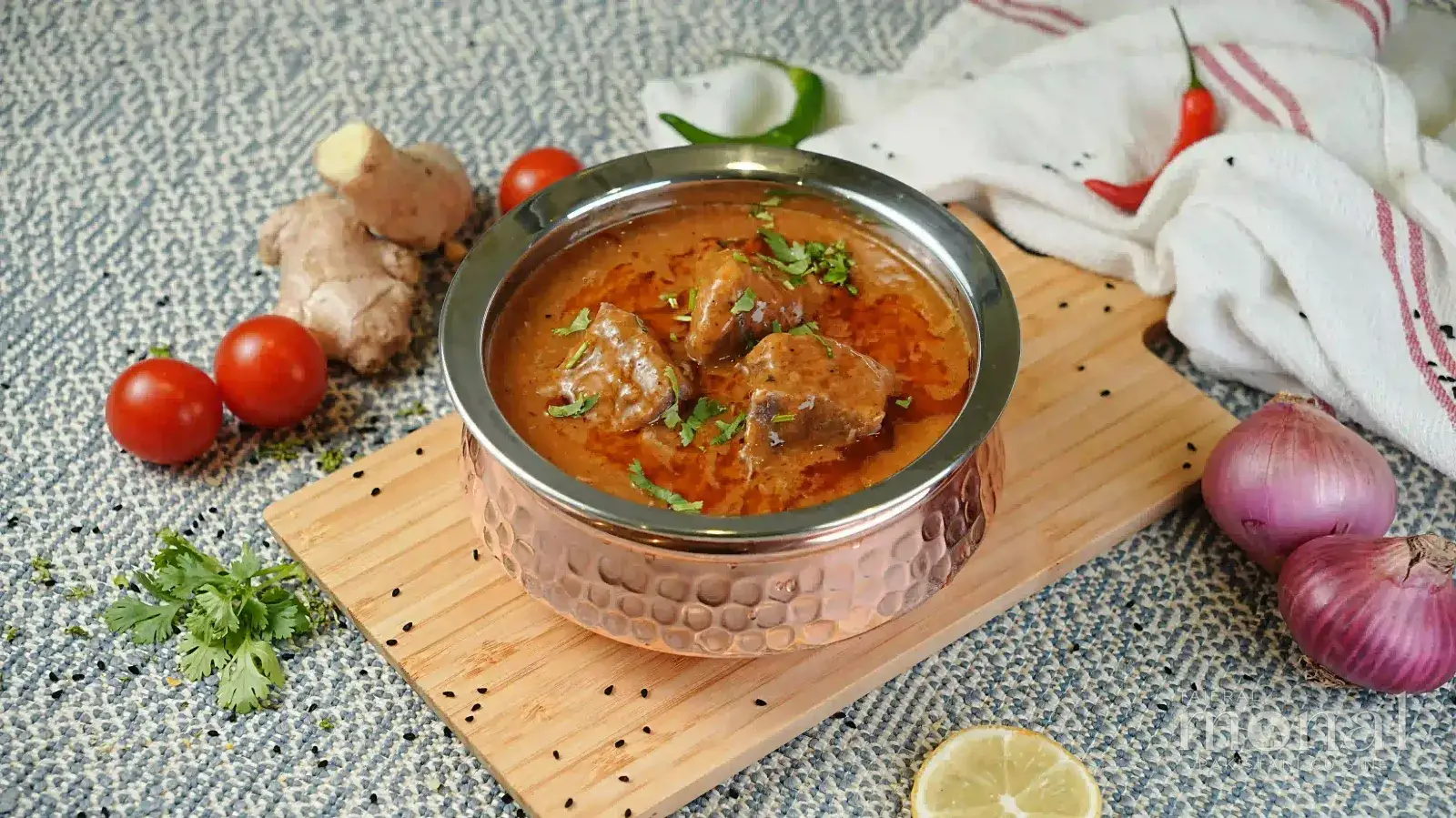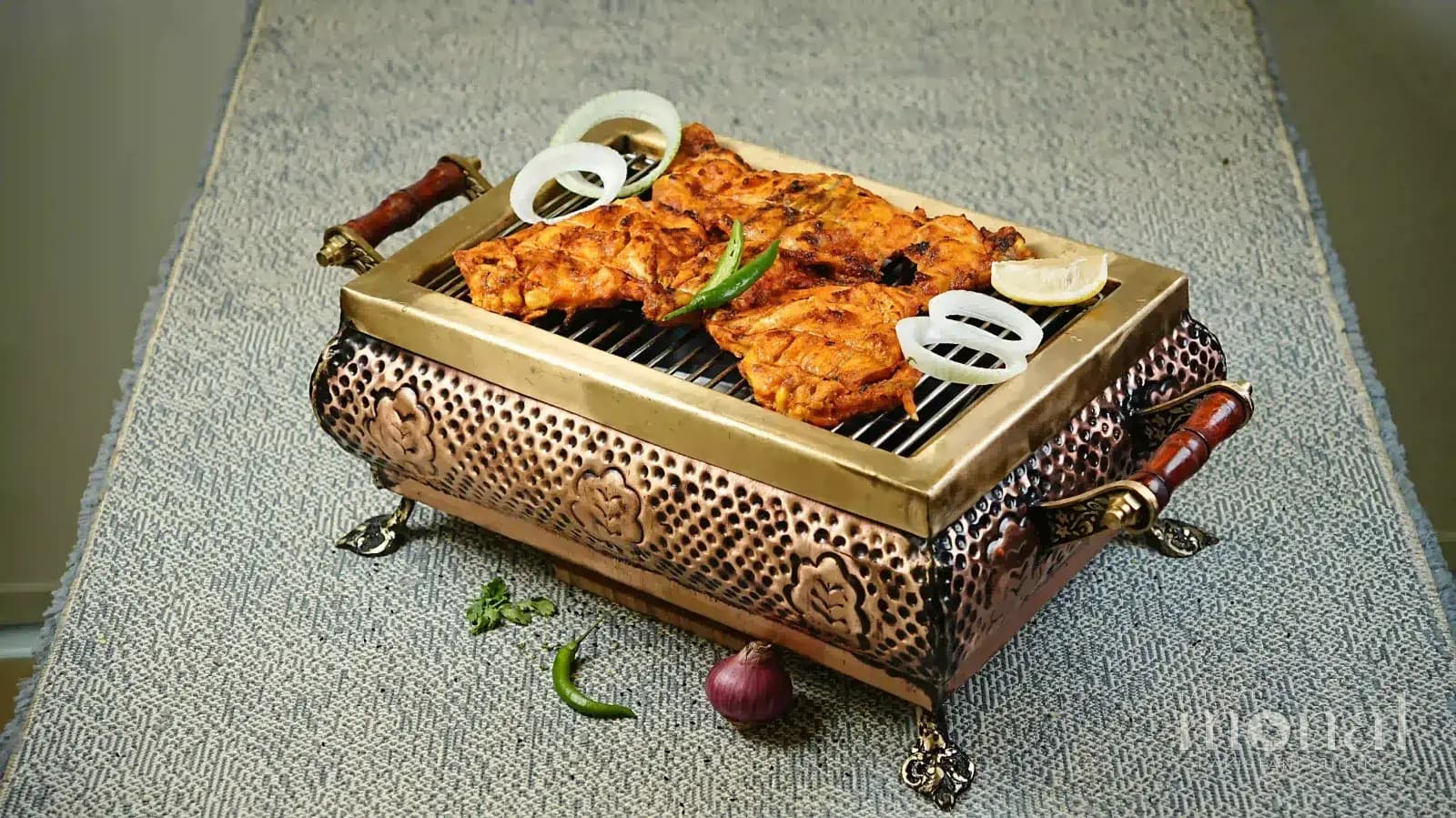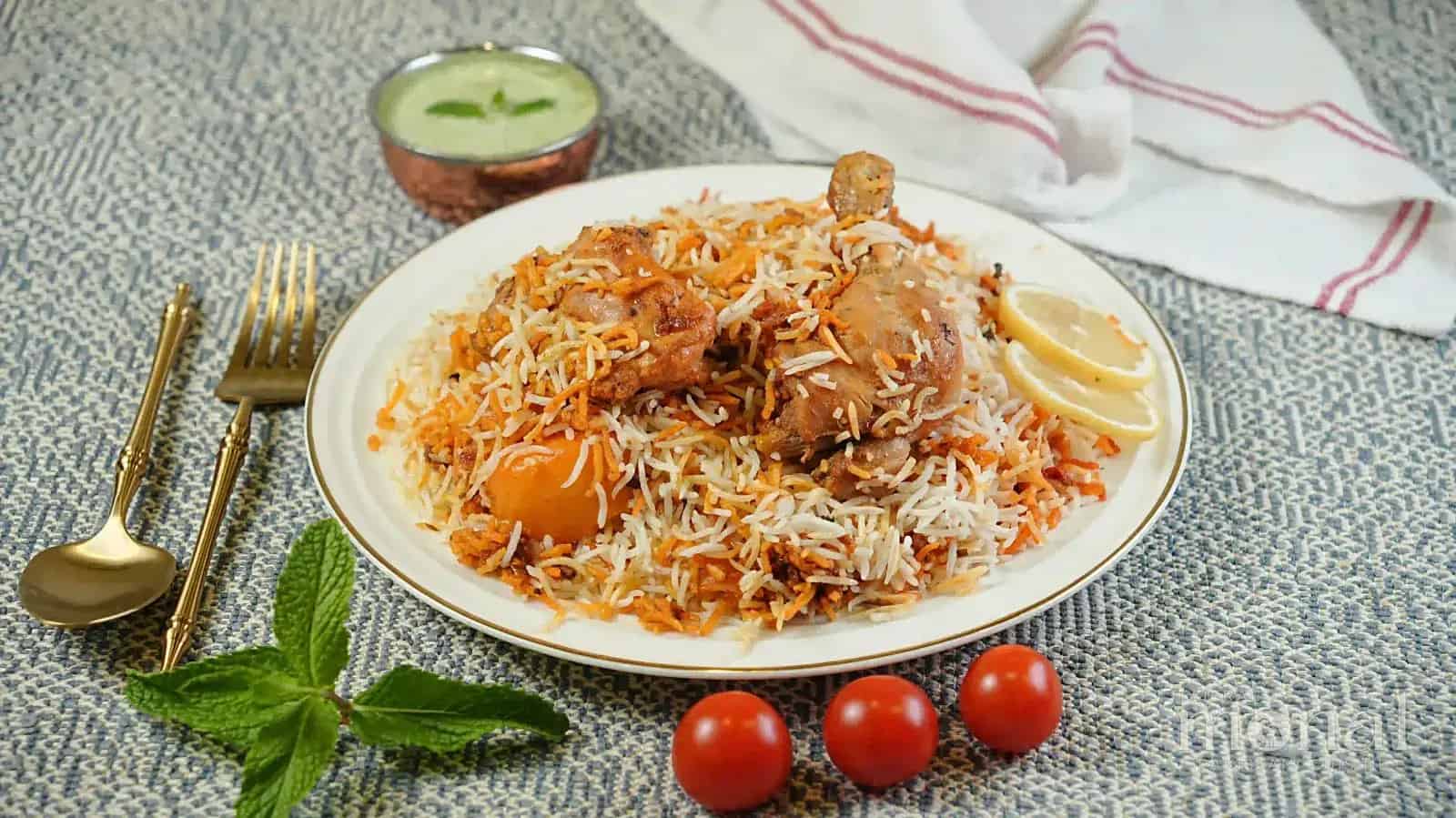
The difference between biryani and pulao is the method, not the spice level. Biryani is cooked in two separate halves that are layered together at the end. Pulao is cooked as one pot, where the rice absorbs the stock the meat was cooked in. Everything people notice about how the two taste comes out of that one distinction.
Biryani is layered
For biryani, the meat is cooked into a thick masala and the rice is boiled separately until it is about three quarters done. The two are then layered in the same pot, sealed, and finished over a low flame so the steam carries the masala up through the rice. That last stage is called dum.
Because the rice is seasoned by steam rather than boiled in the masala, a good biryani has grains that taste different from one another. Some carry heat and colour, some stay plain. That unevenness is the point, not a fault.
Pulao is one pot
Pulao goes the other way. The meat is cooked first, the stock it produces is kept, and the raw rice is then cooked directly in that stock until the liquid is gone. The seasoning is in the water the rice drinks, so every grain ends up the same colour and the same strength.
That makes pulao milder, more even, and aromatic rather than hot. It is the dish to order when you want rice and meat without the heat, and it is why it works for children and for anyone eating Pakistani food for the first time.
How they compare on the plate
- Biryani: layered, uneven, stronger masala, usually chilli-forward
- Pulao: single pot, even colour, aromatic rather than hot, lighter
- Biryani is normally eaten with raita; pulao is often eaten with salad or plain yoghurt
- Biryani is a full meal on its own; pulao is often served alongside a karahi or a grill
What each costs at Taier Al Monal
On our full menu in Abu Shaghara, Chicken Biryani is AED 15 and Mutton Biryani is AED 20. On the pulao side, Plain Pulao is AED 10, Chicken Tikka Pulao is AED 20 and Afghani Mutton Pulao is AED 28.
Chicken Biryani at AED 15 is the cheapest full plate we serve, which is why it is where most first-time guests start. If you are feeding a group rather than yourself, both appear on the dinner buffet, and the catering packages build around them from AED 45 a head.
Which one should you order
Order biryani if you want the stronger, spicier, more complicated plate and you are happy eating it on its own. Order pulao if you are sharing a table with grills and karahi, if you are eating with children, or if you would rather taste the meat than the chilli.
If you cannot decide, a table of four usually gets this right with one of each and a BBQ platter between them. Every price is listed on our offers page so you can work out the bill before you arrive. For the difference between the other two dishes people mix up, see karahi vs handi.
Try both at one table
Biryani from AED 15, pulao from AED 10, served daily from noon to midnight in Abu Shaghara, Sharjah.
See the Full Menu & Prices