By the Taier Al Monal kitchen team · Updated
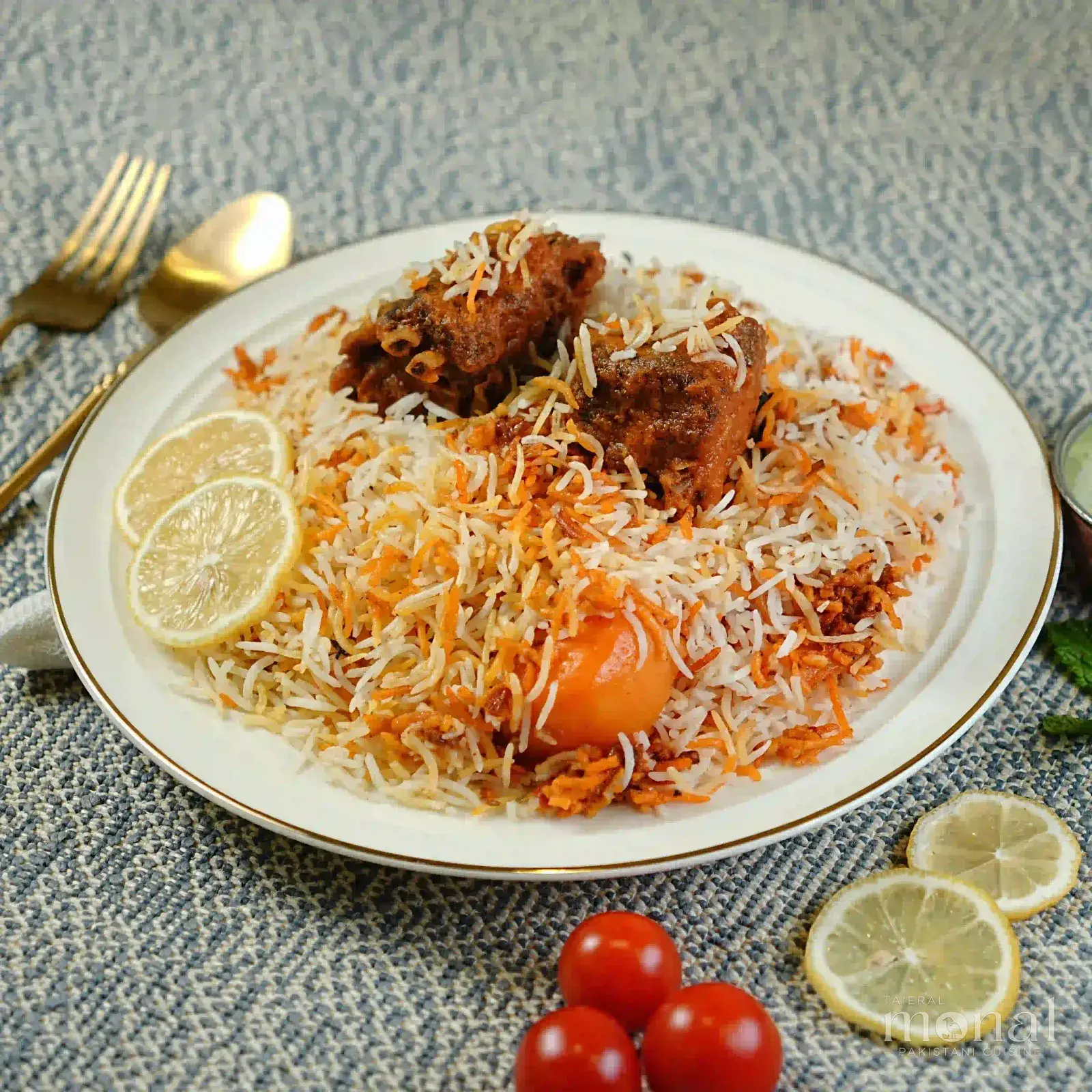
Biryani is neither a health food nor junk food. It is a balanced plate of rice, meat and spice that becomes heavy when the portion is large or the cooking is oily. A typical chicken biryani plate carries roughly 300 to 500 calories and 15 to 30 g of protein, according to common nutrition databases, but a generous restaurant plate can pass 700 calories. The answer to whether biryani is healthy depends far more on how much you eat, and with what, than on the dish itself.
What is in a plate of biryani?
- Rice: most of the energy, as carbohydrate. Basmati is the usual choice
- Meat: the protein. Chicken is leaner than mutton or beef
- Oil or ghee: the main source of fat, and the biggest variable between kitchens
- Spices: cumin, cardamom, cloves, cinnamon and chilli, which add flavour without calories
- Fried onion and potato: in some styles, adding fat and carbohydrate
Published figures vary widely because nobody's biryani is the same. Treat any number you read, including ours above, as an estimate rather than a label.
Is biryani good for weight loss?
It can fit, if you control the portion. The problem with biryani is rarely the dish; it is the second helping. Ways to keep it lighter:
- Order chicken rather than mutton
- Share one plate between two and add a salad
- Fill a third of your plate with raita and salad before the rice
- Skip extra bread: biryani is already a full carbohydrate serving
- Eat it at lunch rather than late at night
- Have one serving at a buffet, then move to grilled meat and salad
Is biryani good for the gym?
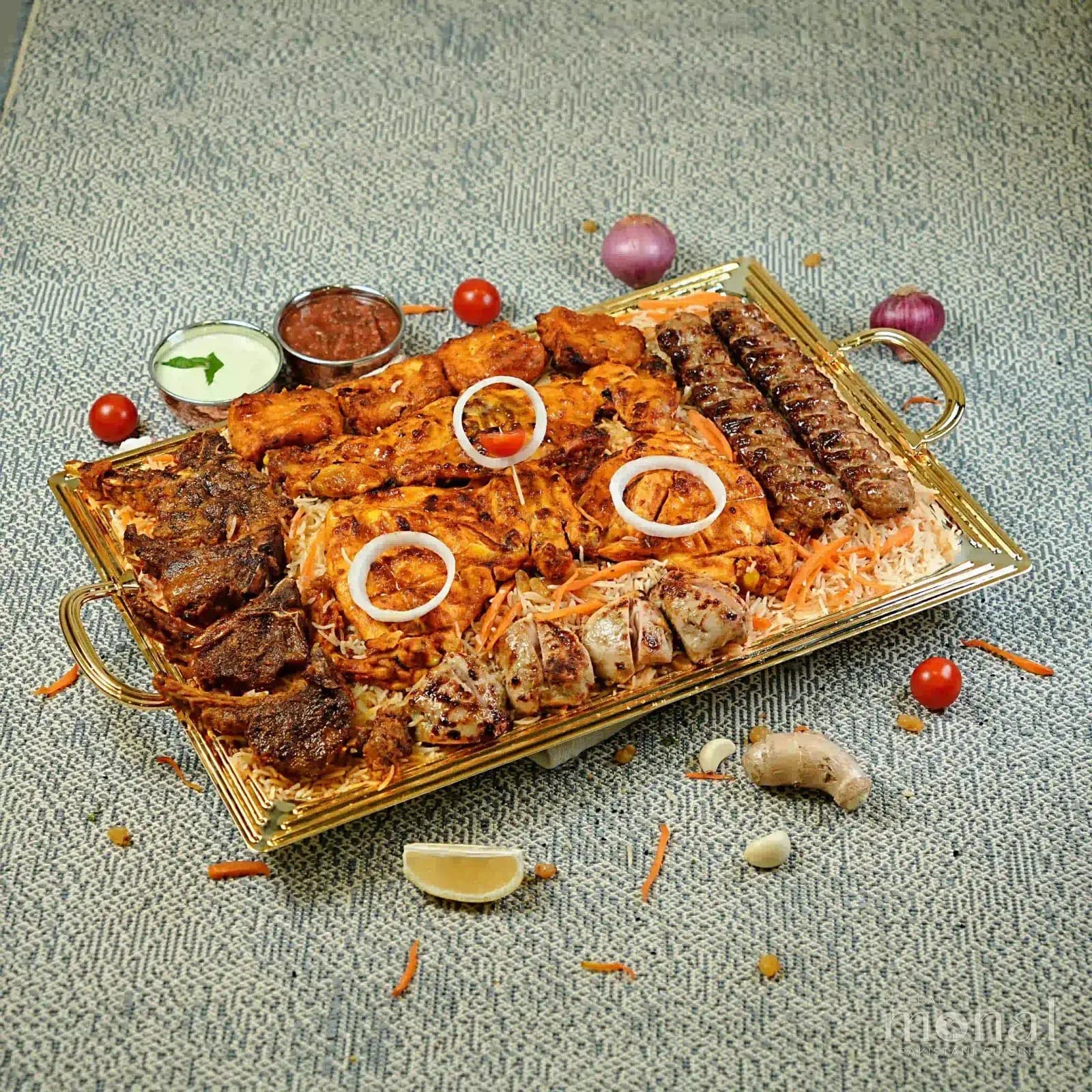
After training, biryani gives you what most people need: carbohydrate to refuel and protein to recover. Chicken biryani has a reasonable amount of protein, though less per calorie than plain grilled chicken. If you are tracking macros, pair a smaller portion of biryani with a grilled dish such as chicken tikka or tandoori boti to push the protein up without doubling the rice.
Can you eat biryani every day?
Most nutritionists would say no, mainly because of the oil, salt and refined rice in a typical restaurant plate. Restaurant food in general is high in sodium. As an occasional meal, two or three times a month alongside a varied diet, biryani is fine for most healthy adults. If you have a medical condition, follow your doctor's advice.
Biryani vs pulao vs plain rice
- Pulao is usually cooked with less spice and often less oil than biryani; see our biryani vs pulao guide
- Plain rice with a grilled dish and daal is the lightest option
- Vegetable biryani has less protein than chicken biryani, not necessarily fewer calories
Healthier Pakistani dishes to order instead
- Chicken tikka or tandoori boti: grilled, high protein, no sauce
- Daal maash or daal chana: plant protein and fibre. See daal chawal
- Grilled fish or fish tikka: lean protein. See Pakistani fish
- Roti instead of butter naan
- Salad and raita on the side of everything
Our biryani
At Taier Al Monal in Abu Shagara, Sharjah, chicken biryani is AED 15 and mutton biryani AED 20. A single plate is a full meal for one person. If you are watching your intake, order the chicken, add a house salad at AED 8, and skip the naan. For everything else about the dish, see our best biryani in Sharjah guide.